The Trail, Cleared
No Comments
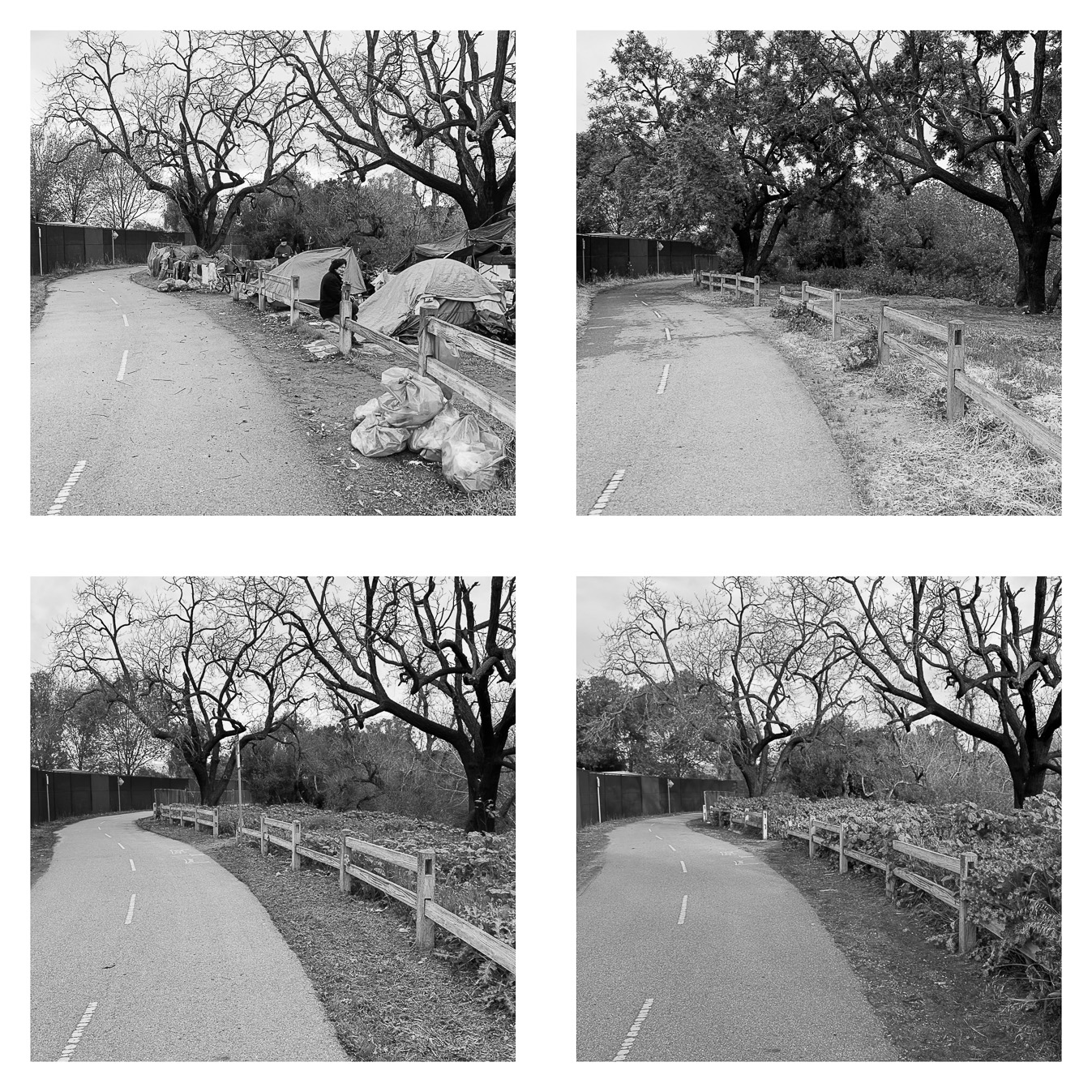
(click on images to enlarge)
Across the country, cities are reclaiming marginal lands, often in places where unhoused people have lived. The Trail, Cleared examines what happens when ecological recovery and human displacement occupy the same ground.
The work grows out of my long engagement with the Coyote Creek Trail, a corridor I photographed repeatedly from 2014 to 2024 for The Trail. That project followed the trail as a lived and contested landscape, where recreation, habitat, and makeshift dwellings existed side by side. The Trail, Cleared begins after that fragile coexistence was largely brought to an end. Following new policies aimed at removing encampments from the creek corridor, a series of 2025 abatements displaced nearly everyone living along the trail and established no-encampment zones.
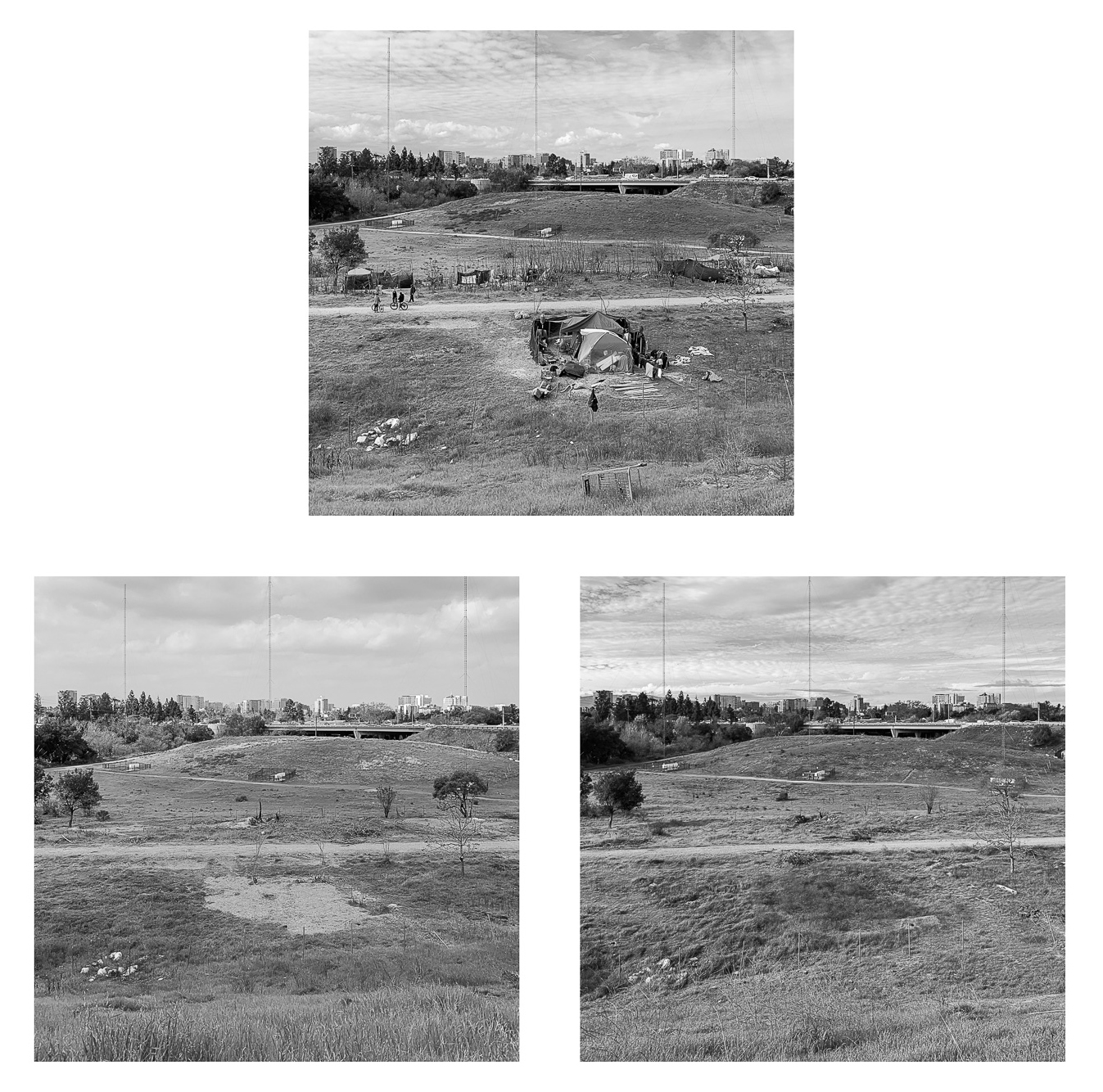
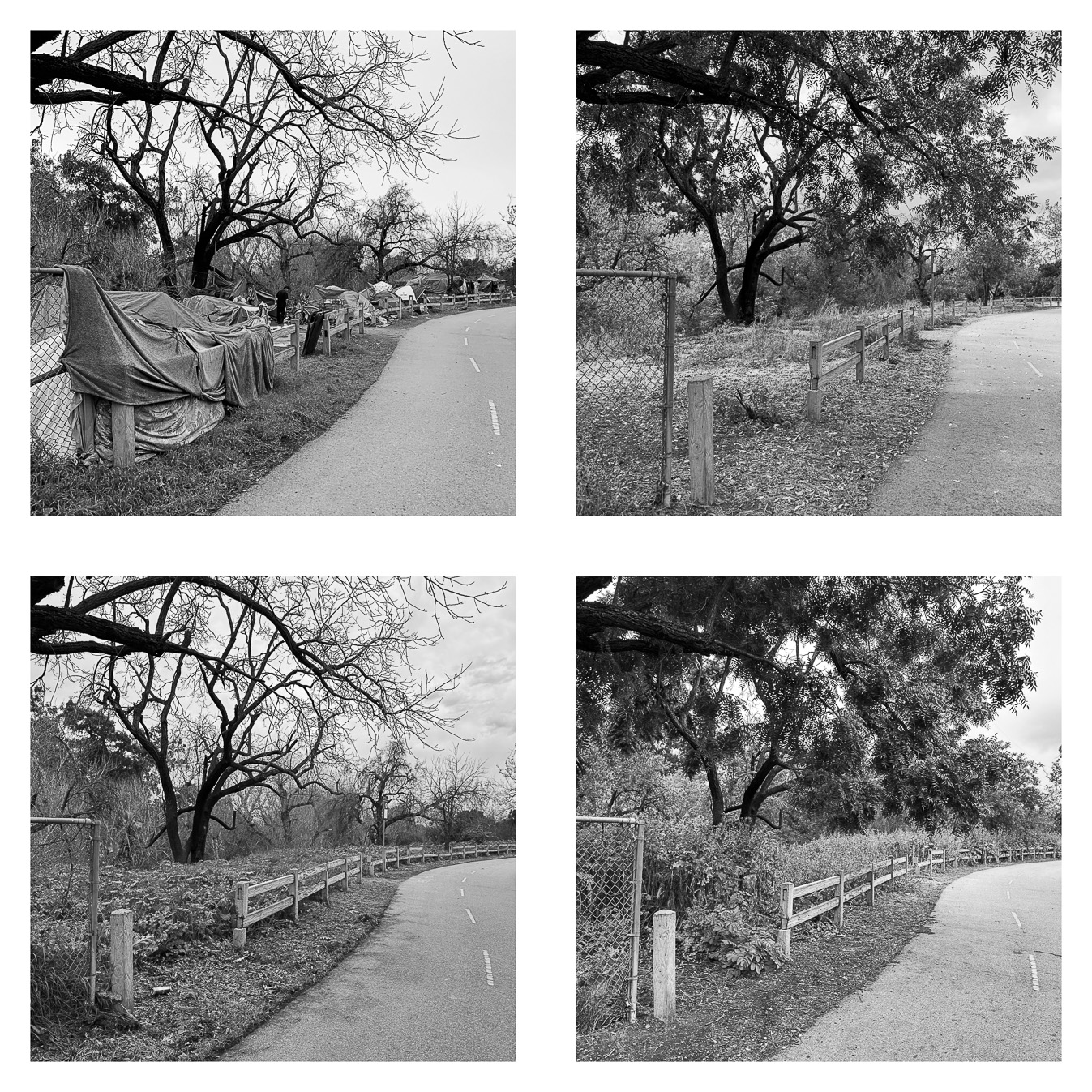
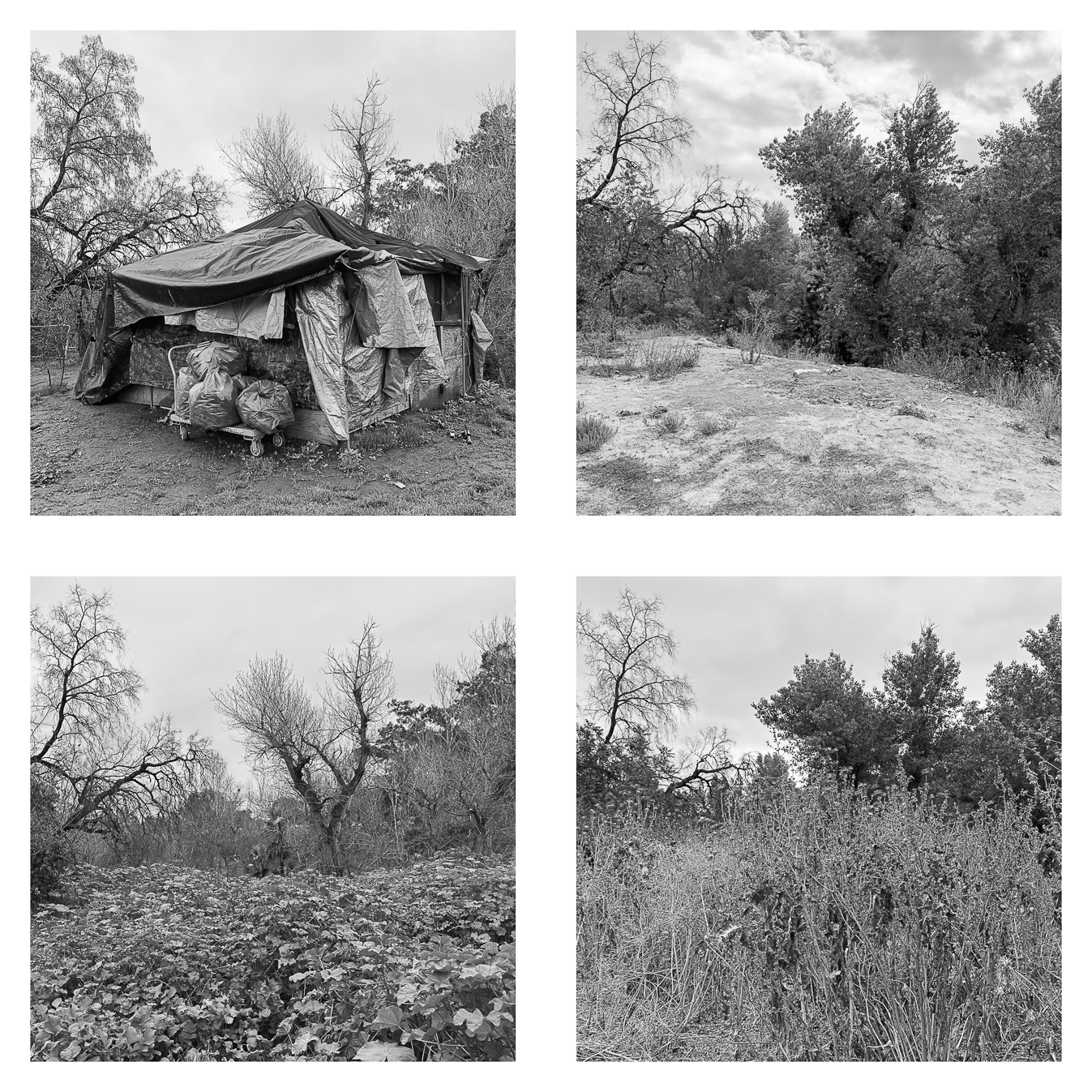
Returning afterward and missing familiar faces, I photographed instead the traces of their presence and the regrowth that gradually covered them. By applying rephotography to cleared encampment sites, the work addresses a subject rarely granted this kind of sustained visual attention.
Repeating the same viewpoints over time and assembling them in grids, I use photography not only to record physical change, but also to question what counts as restoration, and what is being erased, in one of the world’s most prosperous regions. I print the photographs as square black-and-white images to evoke cycles of persistence and loss, and to frame human and natural subjects in equal measure.
The creek corridor may appear healed, but the grids resist a simple narrative of renewal. They ask what kind of restoration is possible when ecological recovery follows displacement, and how public land absorbs, conceals, and remembers the people who once lived there.
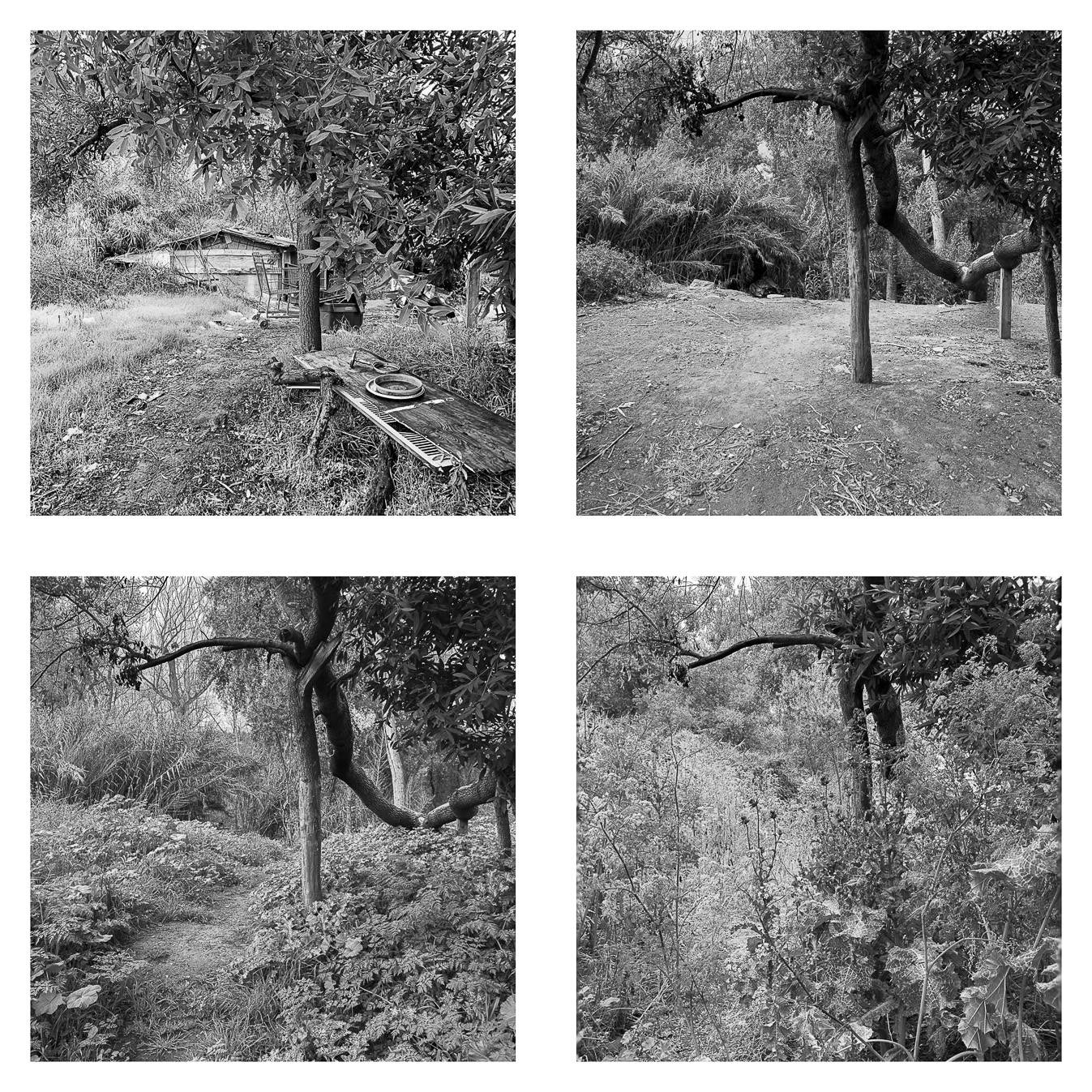
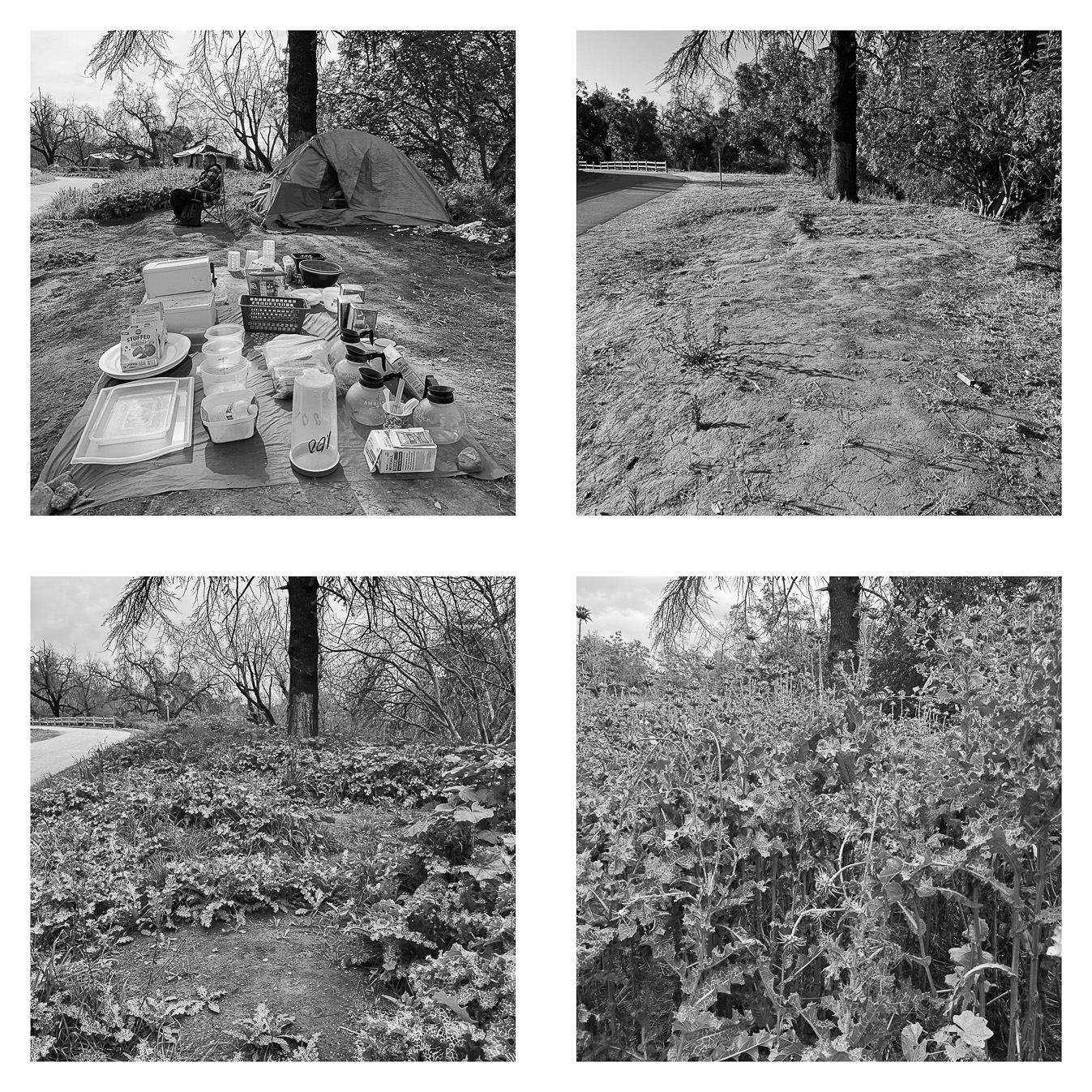
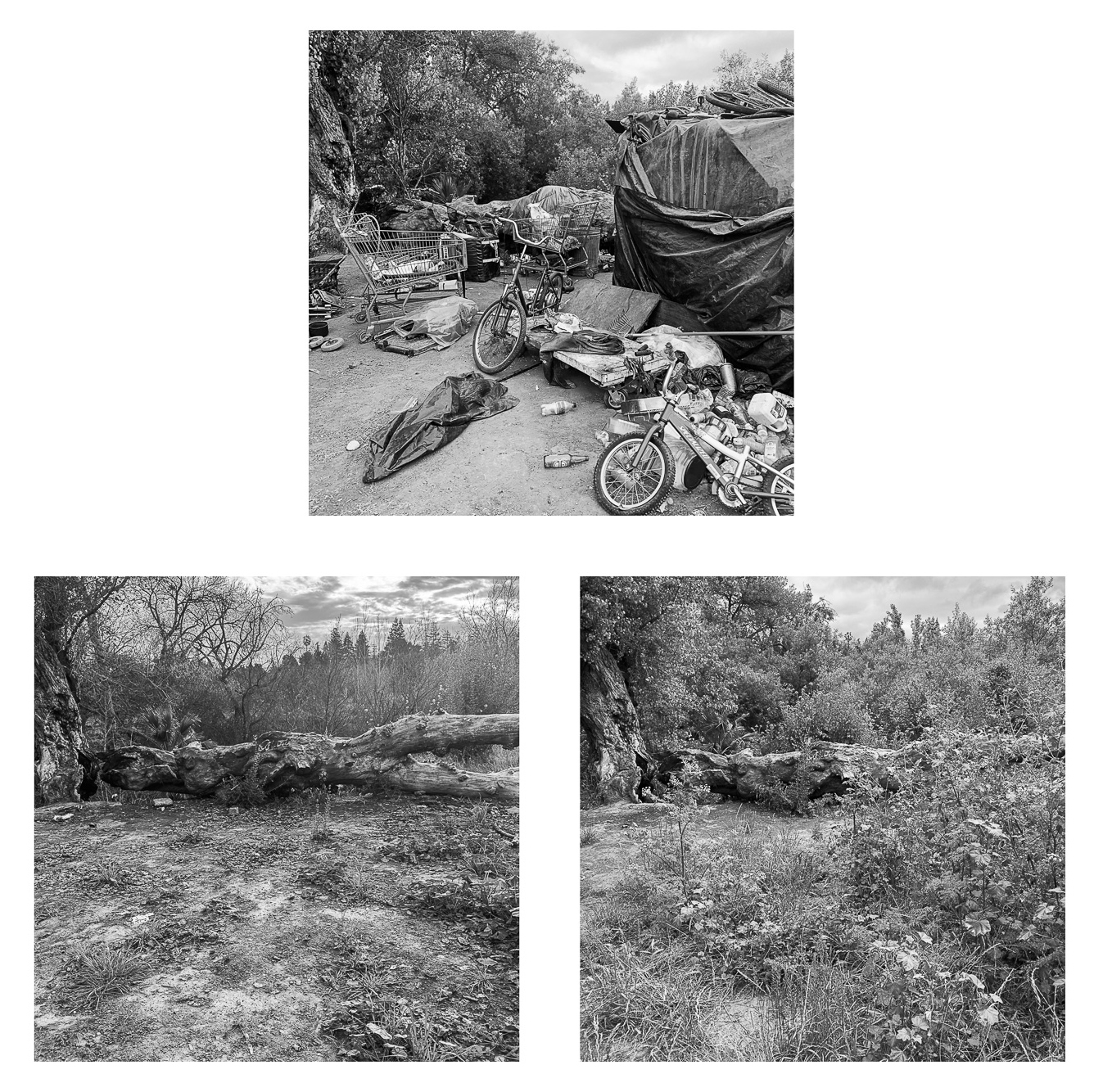
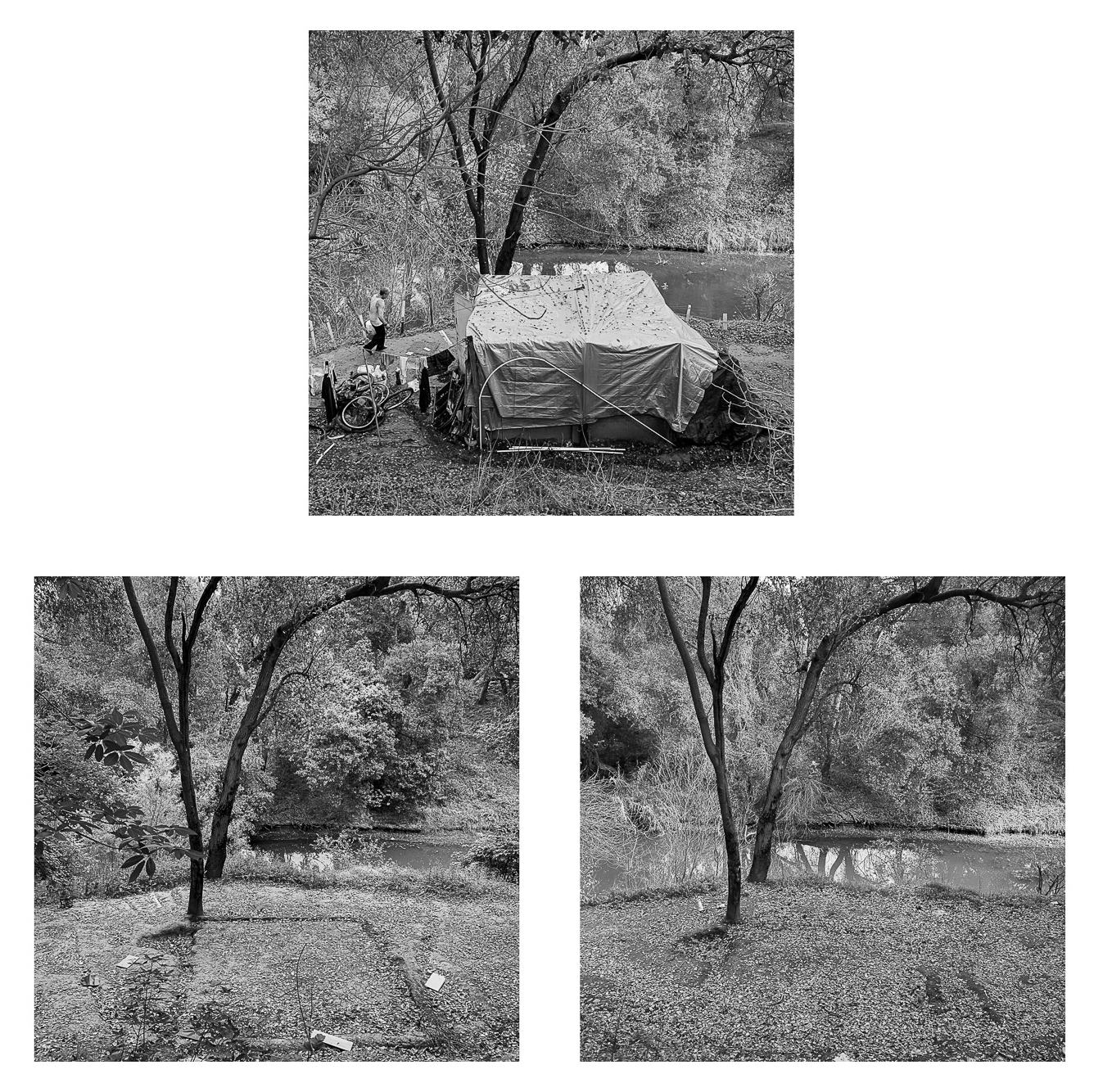
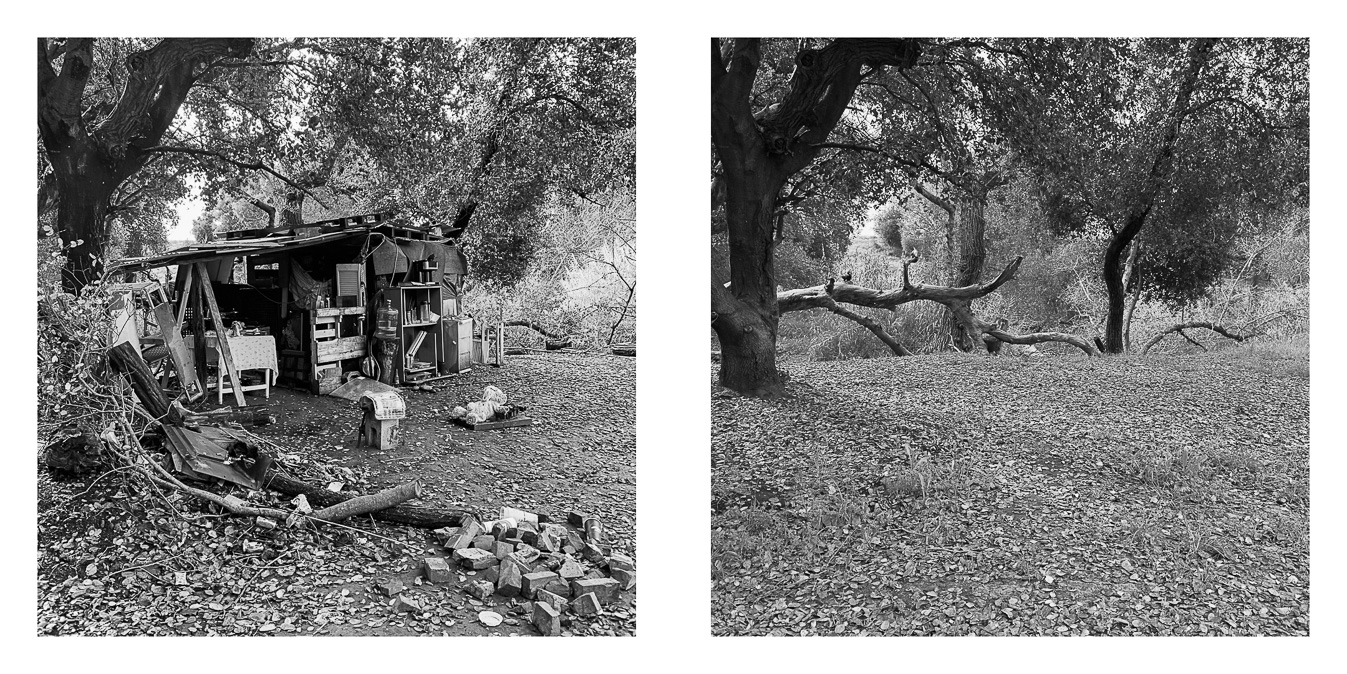
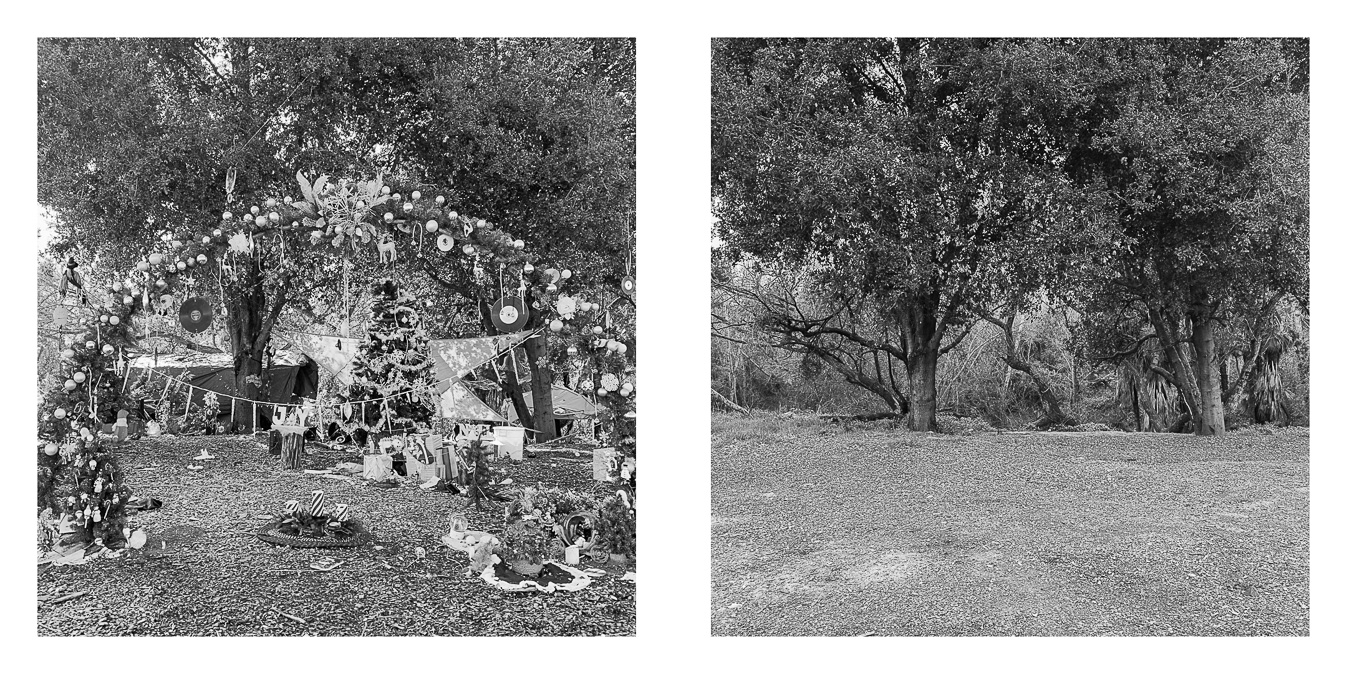
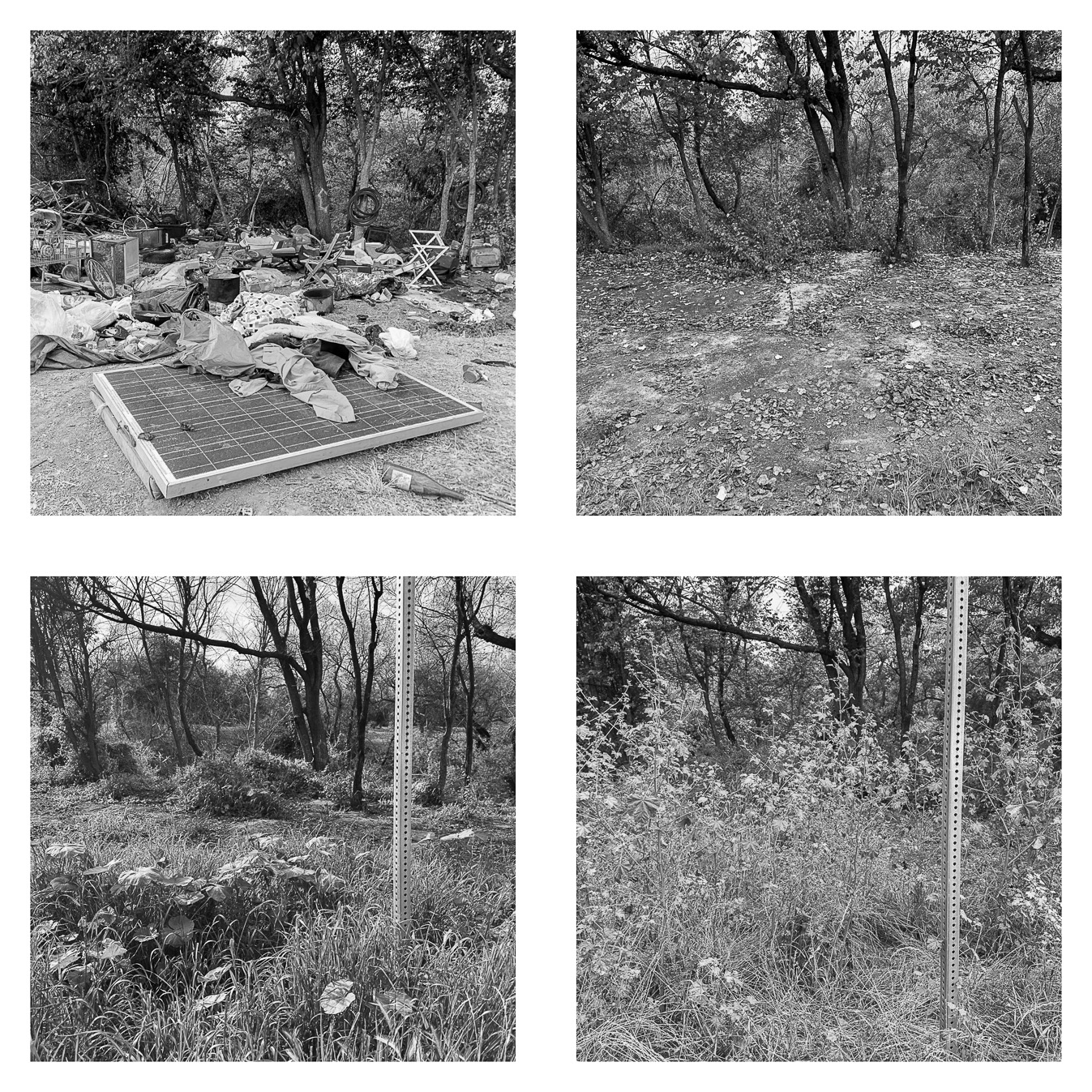
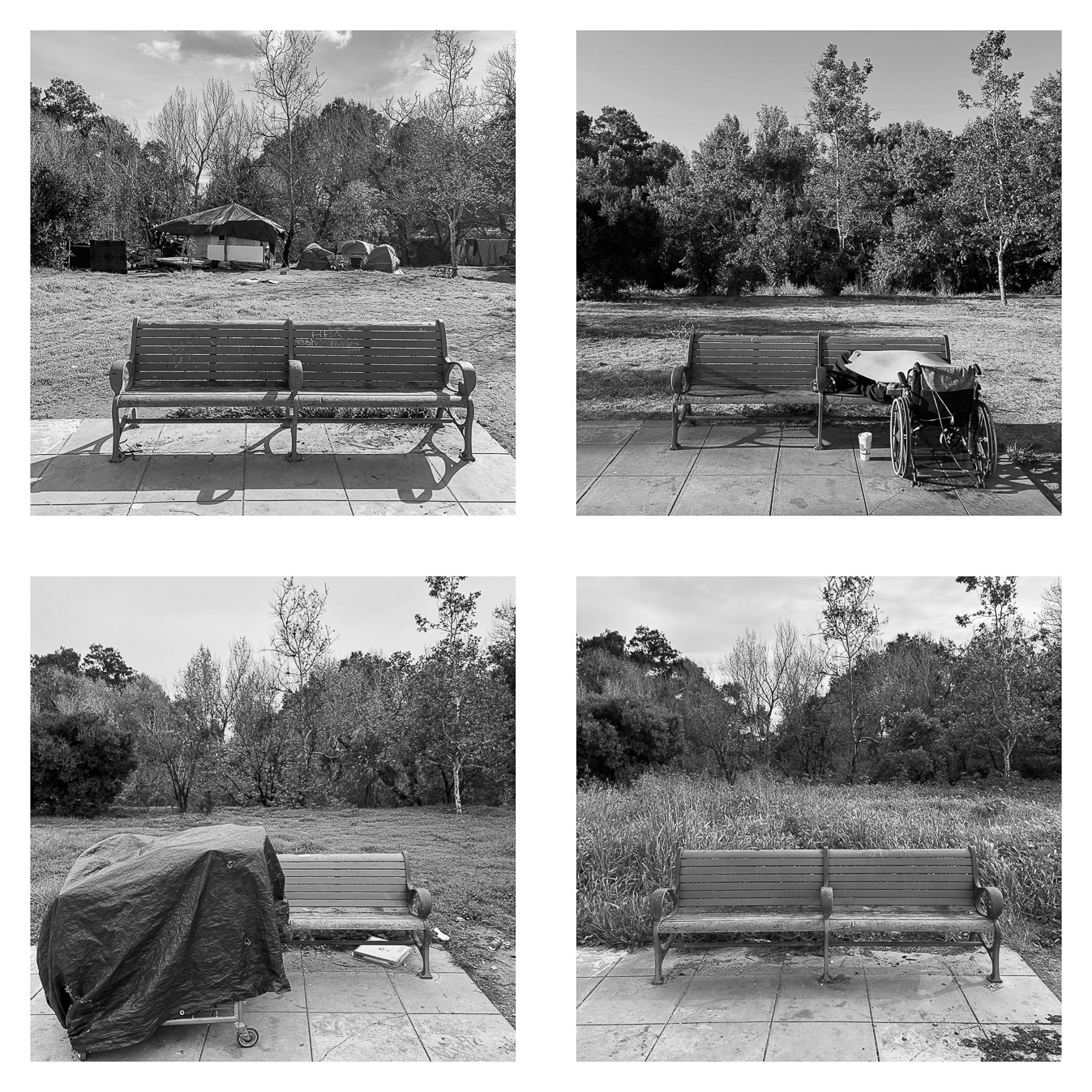
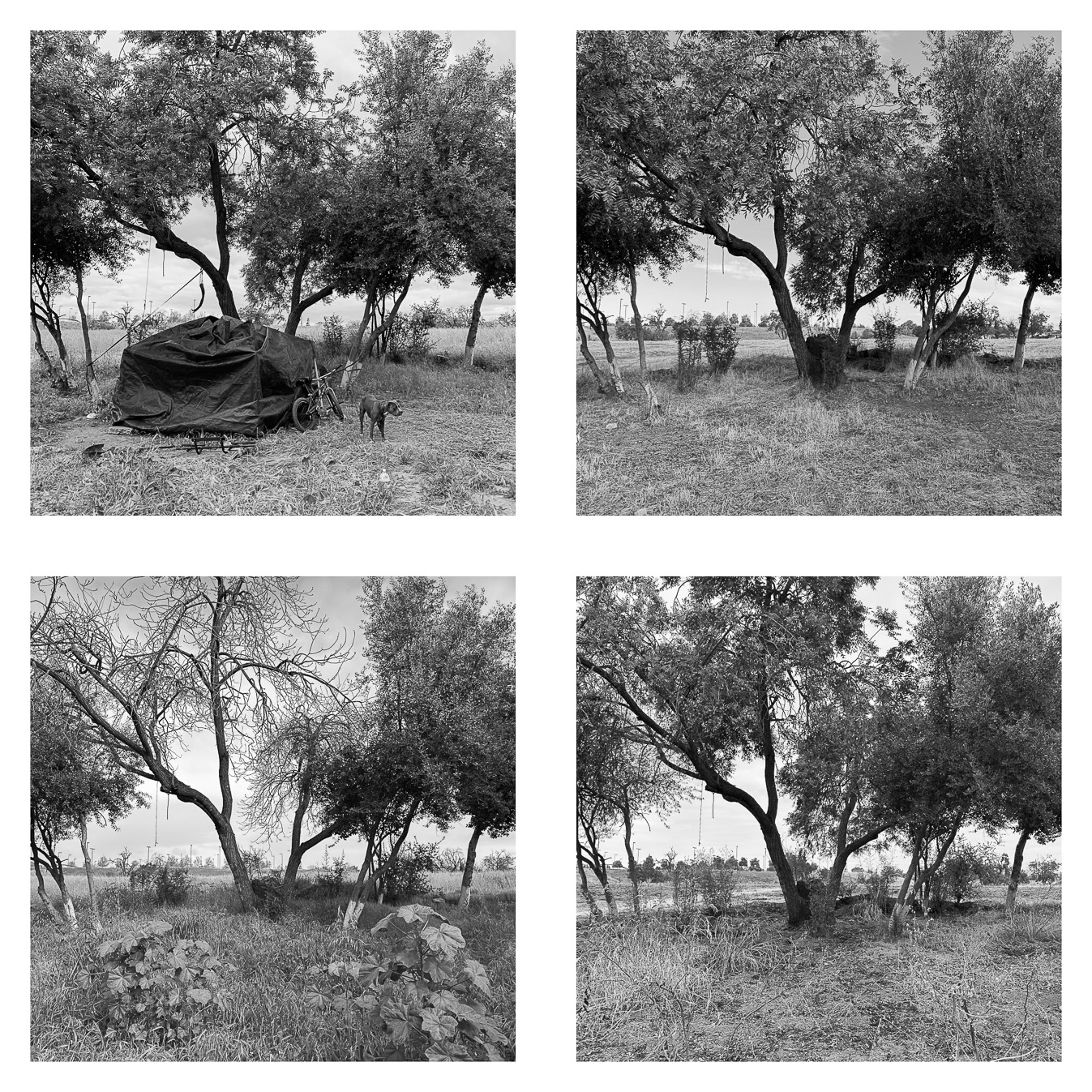
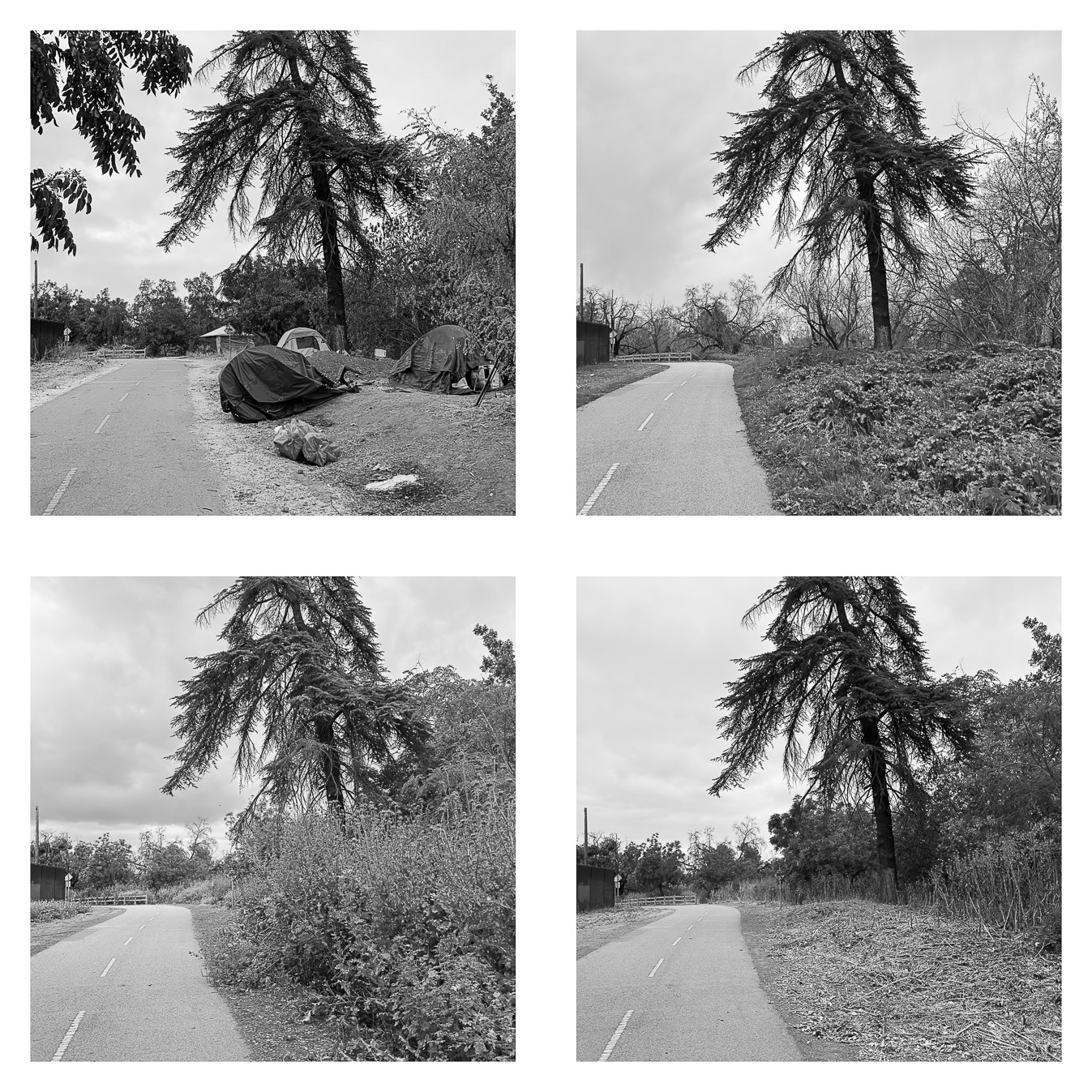
Rephotography is the practice of returning to a previously photographed site and making a new image from the same viewpoint, so that time becomes visible through comparison. Its value now seems self-evident within contemporary photography, but that was not always the case. Mark Klett has recounted showing rephotographic work to Ansel Adams, who reportedly responded, “Interesting, but that’s not art.” Virginia Adams later apologized discreetly. The anecdote is revealing: a method that once appeared closer to survey, documentation, or historical evidence has since become recognized as a powerful conceptual tool.
Several landmark projects helped establish that recognition. The Rephotographic Survey Project returned to nineteenth-century survey views of the American West, using repeated images to examine landscape change, photographic history, and the legacy of exploration. Camilo José Vergara’s long-term urban studies returned to the same buildings, storefronts, churches, and streets over decades, recording cycles of abandonment, adaptation, redevelopment, and neglect. Both projects use repetition to make historical change visible through place.
The Trail, Cleared differs from those precedents because its central subject is not what remains visible, but what has disappeared. The repeated view does not primarily measure geological change or urban transformation. It marks places where people once lived, then follows how those sites become visually absorbed back into the landscape. The later photographs may look calmer, greener, even restored, but their apparent resolution is unstable. They ask what kind of recovery depends on removal, and how quickly social history can become invisible.
This also distinguishes The Trail, Cleared from The Trail. In the earlier project, rephotography documented an ongoing condition: the corridor as a shared and contested space where encampments, wildlife, trail users, water, vegetation, and weather continually reshaped one another. The repeated views recorded flux. In The Trail, Cleared, they are oriented toward aftermath. The subject is no longer coexistence in motion, but memory after rupture.
That conceptual shift changed the methodology. In The Trail, repeated views usually emerged from years of moving through the corridor on foot. They were handheld, observational, and often discovered in the course of a longer passage. The alignment was based purely on memory. For The Trail, Cleared, I often returned directly to a remembered site, almost always with a tripod, to align the new image as closely as possible with the earlier one, using a reference image, often printed on paper.
That process was slower and more difficult than it may appear. At close range, a slight shift in camera position can dramatically alter the relationship between foreground and background. Klett’s western rephotographs were anchored by geological formations and the horizon line; in his Grand Canyon work, the canyon’s strata, rims, and distant profiles provided a vast but comparatively stable framework for alignment. Vergara’s urban repetitions by buildings, storefronts, and street grids. Along Coyote Creek, the reference points were less stable and less distinctive, being generally limited to vegetation. Branches grow, bend, are cut back. Exact alignment becomes a negotiation with a landscape that is actively covering its own evidence.
The grids slow down the before-and-after structure and resist the satisfaction of resolution. In some, change appears linear: vegetation steadily returns, covering the site and making it seem increasingly uninhabitable. In others, the process is cyclical, as the city cuts back growth and exposes the ground again. The result is neither a simple story of healing nor one of disappearance alone, but a more complex record of management, regrowth, memory, and erasure. A cleared site may seem restored, but the repeated frame asks what has been recovered, what has been erased, and what remains only as memory.