
Ten Grand Canyon Photography Books
One Comment
There are countless photography books about the Grand Canyon. Many are excellent—well printed, visually memorable, and made with real devotion to the place. Although it spans over a century, this survey is not an attempt to identify “the best,” nor is it comprehensive. Instead, it reflects what I have kept close: the books in my own collection that seem to me the most significant, along with a few transitional titles that help connect larger developments in the history of Grand Canyon photography.
“Significant,” for me, does not mean only strong pictures, though every book here has them. It also means books that changed how the Grand Canyon was photographed, published, or understood: works that pushed technique forward, defined a new aesthetic, documented a pivotal moment, or turned photography into something more than description—into argument, history, or self-reflection. Some matter because they helped shape public opinion about what should be protected. Others matter because they expanded the language of landscape photography, or because they made the canyon feel newly seen—whether from the rim, from the river, or from the difficult terrain in between. And a few are included not because they are major landmarks in themselves, but because they form useful bridges between those that are.
What follows, then, is a personal map of influence: a small selection of books that, in different ways, helped build the Grand Canyon’s photographic imagination, together with a few intermediate works that clarify how one moment led to the next. If I had to reduce the list to only three books, they would be Lasting Light, The Hidden Canyon, and Reconstructing the View. These are the books I return to, and the ones that continue to reward attention each time I pull them off the shelf. If you have any personal favorites, please let me know in the comments!
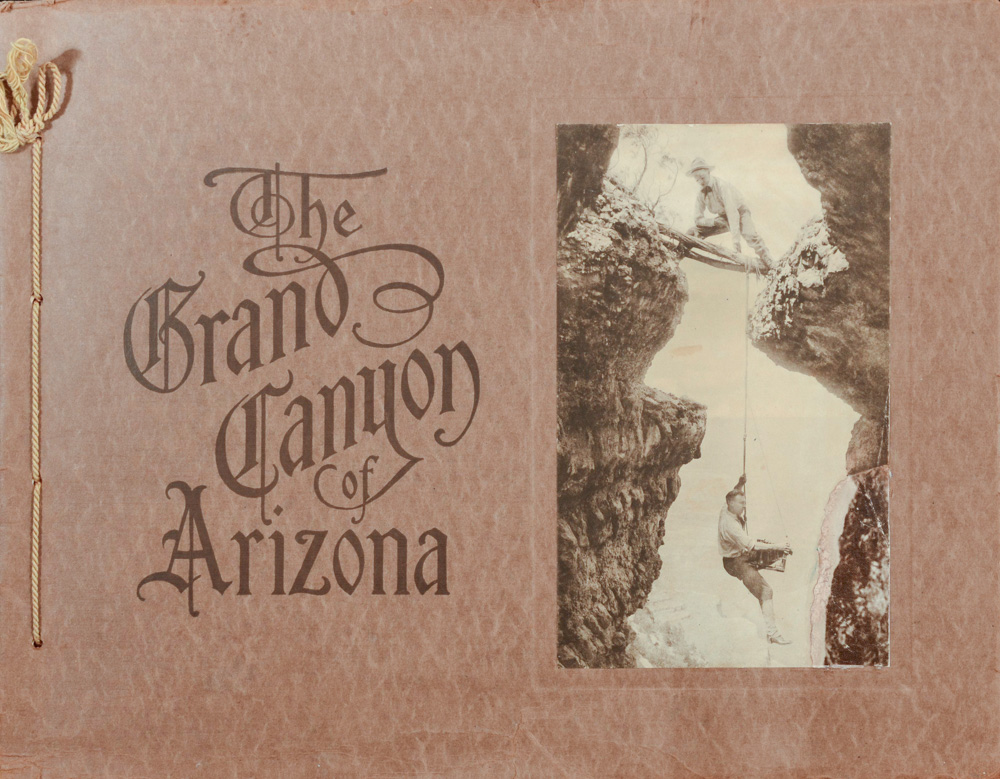
The Grand Canyon of Arizona (1910)
The history of photography of the Grand Canyon is dominated by the Kolb Brothers, Ellsworth and Emery, who spent almost eight decades exploring and photographing the Grand Canyon. They operated a studio at the edge of the South Rim of the Grand Canyon from 1904 to 1976. In the early days, there was no dependable source of water at the Rim to operate the darkroom, so they had to hike down to Indian Gardens and back up for refills. However, it was their daredevil exploits (as suggested by the book’s cover showing Emery dangling from a rope to try and take a photo) that brought them fame. With almost no boating experience, in 1911, they spent four months navigating the entire length of the Green and Colorado Rivers, from Green River, Wyoming, to the Gulf of California, filming the entire expedition. The film went on to become the longest-running movie in history, being shown in their studio until 1976. The expedition also resulted in the book Through the Grand Canyon from Wyoming to Mexico. Initially published by The Macmillan Company in 1914, it underwent 18 printings until 1970, and copies signed by Emery are easy to find. In 1974, Emery made his last river journey at 93, two years before his death. That book is an adventure/travel narrative illustrated with small black-and-white photographs, not primarily a photo book. By contrast, The Grand Canyon of Arizona, initially self-published in 1910, is a photo album with 19 tipped-in 11×8 inch plates, bound with card and string. Subsequent editions slightly differed in the photo selection (pages of the 1911 edition, pages of the 1913 edition). You turned it sideways to view the vertical photos. The process, hand-colored collotype, was not amenable to large-scale production, which may explain why the album has become rare. Collotype was a high-quality photomechanical method that used a light-sensitive gelatin-coated plate to reproduce a photograph with very fine continuous tones, without the dot screen of modern halftone (offset) printing. After the collotype image was printed in black and white, color was added by hand—typically with watercolor or similar pigments—so each plate was individually tinted. The plates include views from the rim, from the river, from the trail (with people invariably on horses), waterfalls, long-gone infrastructure, and even a rephotographic pair. Depicting the human imprint as well as the landscape, they offer a beautiful and pioneering record both timeless and historical.
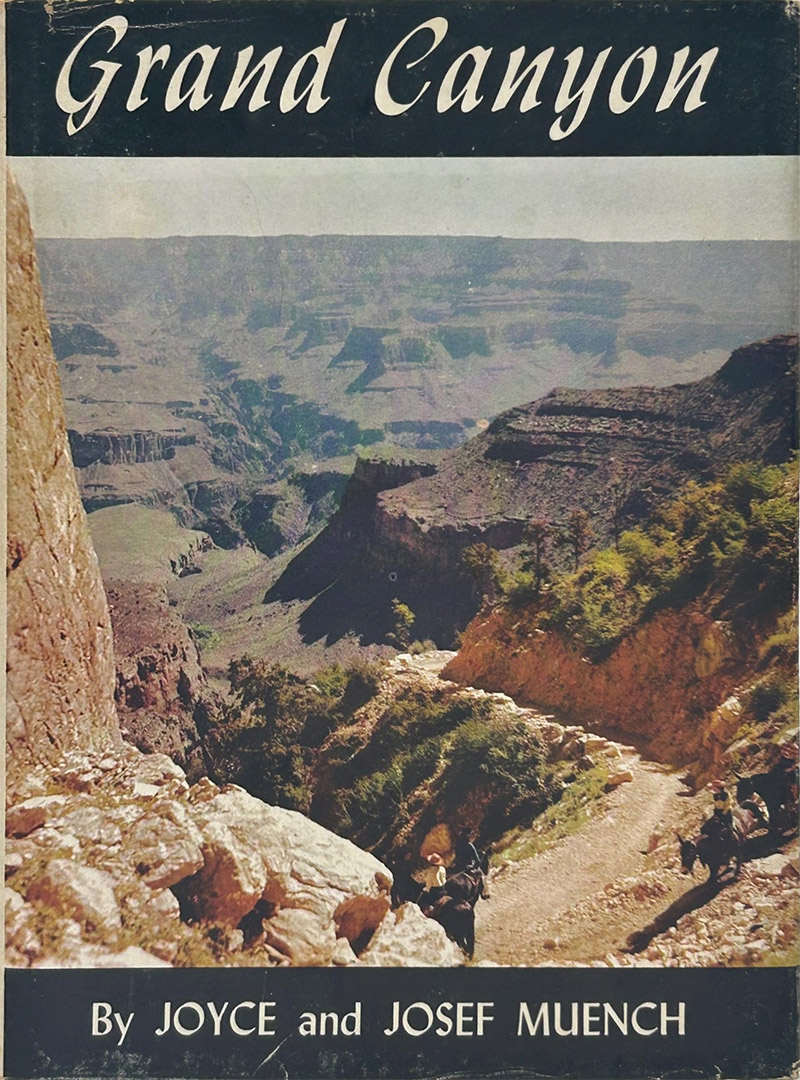
Grand Canyon: A Pictorial Interpretation (1950)
The previous title on this list dates from 1910, whereas the next dates from 1964. Stephen Pyne argues that, in the first half of the twentieth century, the Grand Canyon remained somewhat disengaged from the dominant modernist photographic imagination and did not fully re-enter it until environmentalism recast the canyon as a powerful symbol of preservation; in the meantime, magazines such as Arizona Highways served as the principal vehicles for canyon photography. If Ansel Adams’s black-and-white photographs — reissued in The Grand Canyon and the Southwest (2019) — never became the canyon’s definitive visual language, unlike their role in shaping that of the Sierra Nevada, the Kolb brothers had already anticipated one reason why: The Grand Canyon of Arizona was published with hand-colored plates, as if the canyon itself demanded color from the outset. Arizona Highways treats Josef Muench as one of its foundational photographers and notes that his images helped shape the visual imagination of the Southwest. He traveled to the Grand Canyon more than 250 times during his career, collaborated frequently with his wife Joyce on texts, and stands at the head of an important family line of nature photographers: his son David Muench would go on to become one of the major photographers of the American West, continuing the family’s long engagement with the canyon – David Muench’s Timeless Moments: Grand Canyon National Park (2017) resulted from seven decades of photography. In that context, Grand Canyon: A Pictorial Interpretation, a modestly sized volume (6 x 8.5 inch), is worth noting as an early mass-market pictorial bridge between the luxurious hand-colored canyon albums of the early twentieth century and the more ambitious photographic books that followed in the 1960s. Judging from its color cover, the publisher seems to have recognized the importance of color, even if the interior remained black-and-white and printed in gravure, perhaps because high-quality color reproduction would still have been too expensive.
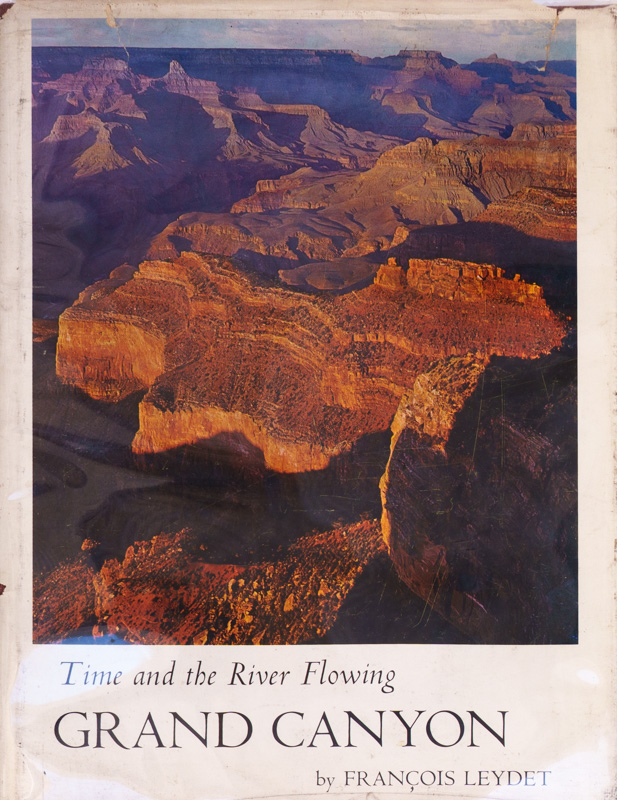
Time and the River Flowing (1964)
Time and the River Flowing is significant as the book that helped prevent the building of two dams in the Grand Canyon, marking one of the first successes of the modern conservation movement in 1968, when the construction project was abandoned. Fusing photography, nature writing, and activism, the book turned the Grand Canyon into not just a place of spectacle but a conservation argument. Published by the Sierra Club in 1964 as the eighth volume of its influential Exhibit Format Series, in an oversize 14.8 × 11.5-inch trim, the series’ format effectively brought the scale and impact of gallery-like photographic display into book form. The color plates used Kromekote, a cast-coated paper with a very hard, very smooth, mirror-like glossy surface, lacquered for added gloss and saturation. The work combined François Leydet’s text and literary excerpts with numerous photographs, using the visual power of photography to shape public feeling. The primary photographer was Philip Hyde, but the book featured photographs from several others, including Ansel Adams — in color! With a narrative following a river trip, it fostered our understanding of the Grand Canyon as something whose value depended not only on scenery, but on the continued life of the river itself.
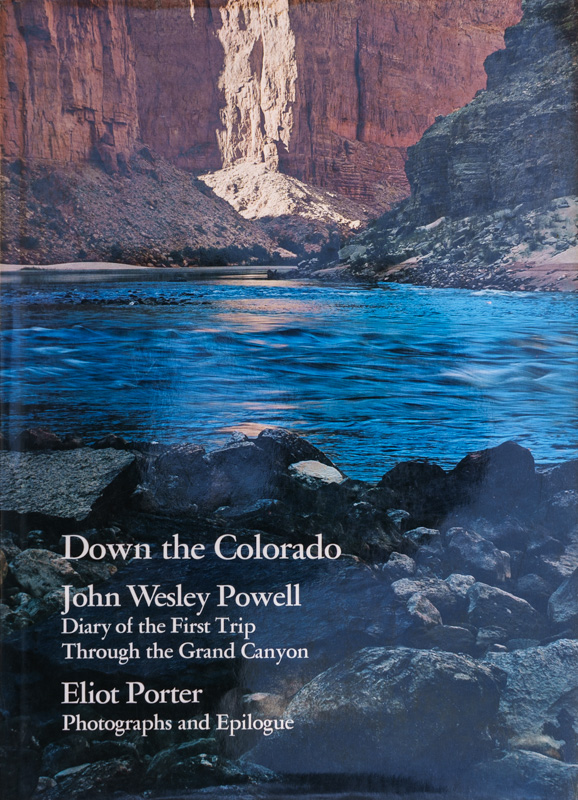
Powell’s Diary of the First Trip Through the Grand Canyon, 1869 is the foundational firsthand account of the first Colorado River expedition and an early document of scientific exploration in the American West. It helped establish the Grand Canyon not just as a dramatic landscape, but as a subject of geographic knowledge, national imagination, and later mythmaking around exploration. Powell’s narrative became one of the key texts through which later generations understood the canyon before the era of modern photography and mass tourism. When the diary was republished in 1969 — the centennial year of Powell’s 1869 journey — as Down the Colorado, edited by Don D. Fowler with Eliot Porter’s photographs and afterword, it gained a second significance: it linked the nineteenth-century expedition narrative to the twentieth-century environmental and photographic imagination of the canyon. The Place No One Knew, a requiem for Glen Canyon, was possibly the high point of Porter’s work, and in Down the Colorado he continues that mostly intimate aesthetic, while the book, published by Dutton, reprised the oversize trim of the Exhibit Format Series. His pictures do not simply illustrate the text but renew its sense of wonder. Although Powell’s diary starts at Green River, Wyoming, the photographs concentrate mostly on the Grand Canyon portion of the river.
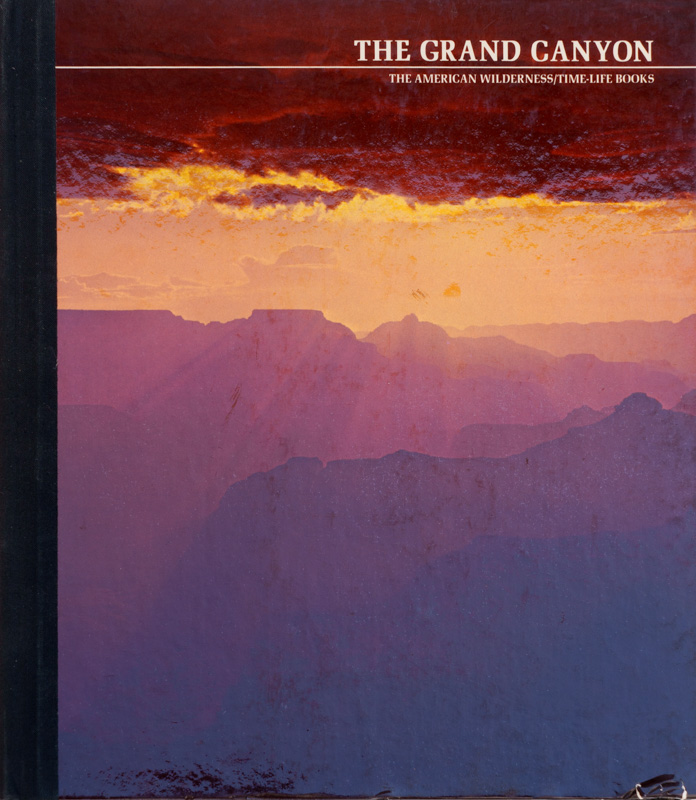
Published by Time-Life in 1973, with text by Robert Wallace and photographs by Ernst Haas, The Grand Canyon was part of the widely distributed American Wilderness series, so it helped circulate a vivid, contemporary color vision of the canyon beyond expensive coffee-table books. The book brought Ernst Haas’s modern color photography to one of the most iconic American landscapes in a 9×10-inch book designed for a broad audience. Haas had already made his mark as a major figure in photojournalism and color photography, using 35mm cameras, unlike the photographers of the previous books, who worked with large-format cameras. In the 1960s, he began to photograph nature, culminating in The Creation, published in 1971. That same year, John Blaustein guided him down the Grand Canyon on assignment for Time-Life. The resulting book applies Haas’s lyrical, highly abstract, and interpretive use of color to the Grand Canyon, presenting the landscape not simply as topographic fact or scenic monument, but as a place of changing light, atmosphere, and visual drama.
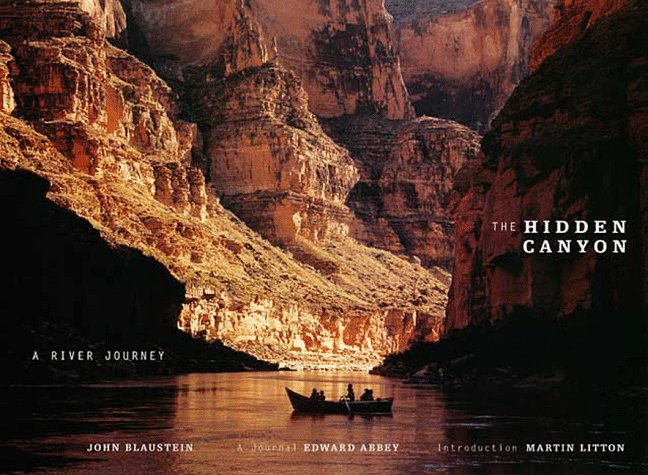
The Hidden Canyon: A River Journey (1977/1999/2015)
The Hidden Canyon: A River Journey is a classic Grand Canyon river book because it unites John Blaustein’s photographs, Edward Abbey’s journal, and an introduction by Martin Litton, three figures central to the postwar environmental and river-running culture of the Colorado. John Blaustein was not an outside observer but a longtime Grand Canyon river guide and photographer, so the book carries the authority of lived experience on the river rather than scenic distance. The 35mm photographs convey the experience of navigating the alternating calm and churning waters of the Colorado in small wooden rowboats known as dories. Edward Abbey, one of the most influential literary voices of the desert Southwest, brings to it humor and the emotional force of modern wilderness writing. During the trip, despite a lack of prior river-running experience, he was entrusted with the oars of a dory, something that certainly would not happen on a modern trip! Martin Litton, a legendary Grand Canyon river runner, dory outfitter, and major Grand Canyon conservation activist, frames the project from within the movement that fought to protect the Colorado. Together, their roles make the book more than a beautiful canyon album: it becomes a document of river culture, environmental commitment, and intimate canyon experience from river level. The book was first published in 1977 by Penguin Books, reissued in 1999 by Chronicle Books, and then in 2015 by Cameron Books, with additional new photographs and an afterword by Kevin Fedarko. In order to study book design, I acquired copies of the three editions and found the differences instructive. Although Cameron is by far the smaller publisher (making copies of my favorite 2015 edition less common, hence my use of the 1999 edition as the default), I liked the work of their creative director Iain Morris enough to trust them to publish the first edition of Treasured Lands.
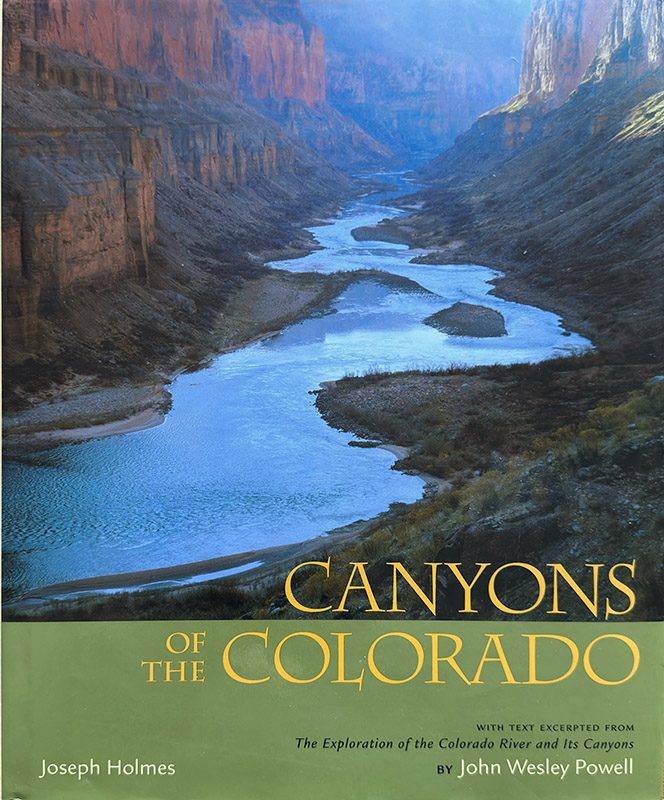
Canyons of the Colorado (1996)
Like Down the Colorado, this book pairs Powell’s diary with the photographs and commentary of a modern-day photographer, Joseph Holmes. Canyons of the Colorado stands out for the exceptional consistency of both Holmes’s images and their reproduction. Although some of the finest Grand Canyon photographs are in the book, its scope is much broader: the subject is the Colorado Plateau as a whole, not just the river corridor. I am particularly fond of the early morning Nankoweap cover photograph, as most of the images of the location are from the evening. The book belongs to an early transitional moment, when photographs made on film were increasingly reproduced through digital prepress workflows—a shift especially relevant in Holmes’s case, given his pioneering work with drum-scanned color transparency film and digital color management. The nuance achieved through those techniques is evident when the book is compared with Down the Colorado; yet despite its high production values, it remained relatively affordable. For comparison, Down the Colorado cost $30 in 1970 ($250 in 2026), whereas Canyons of the Colorado cost $40 in 1996 ($85 in 2026) in hardcover, with a more widely circulated paperback edition also available.
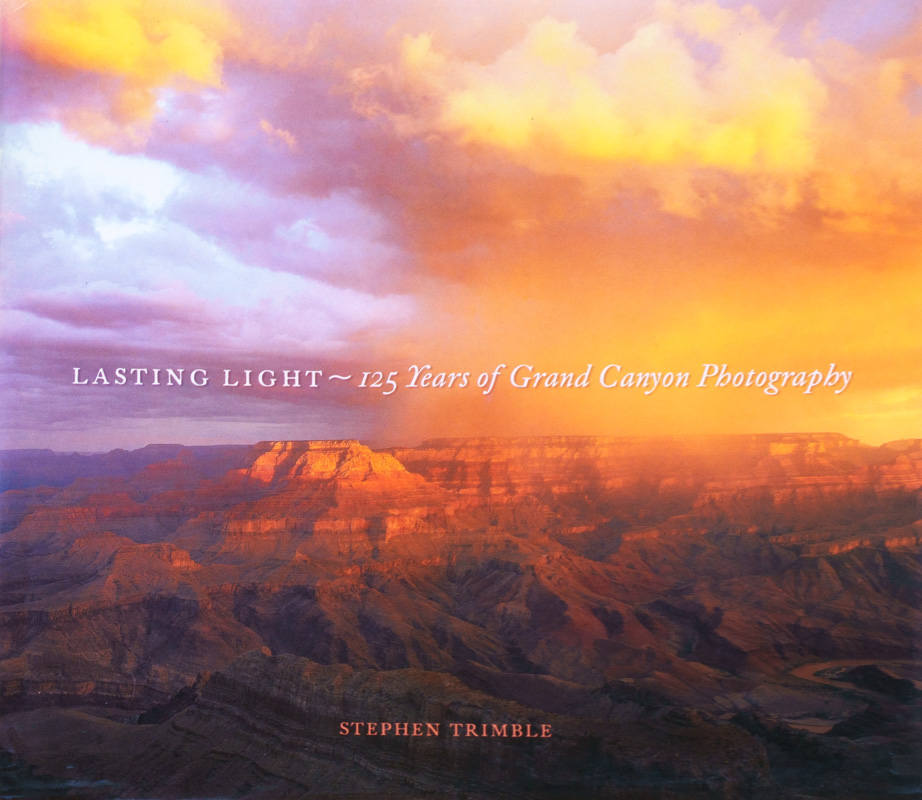
Lasting Light is a great anthology, treating Grand Canyon photography as a history and an evolving tradition, not just a collection of the finest (mostly) nature images of the canyon. The book traces 125 years of photographing the canyon and places contemporary photographers within that longer lineage, showing how different generations have interpreted the same landscape in different ways. It is especially valuable because Stephen Trimble did more than assemble pictures: he interviewed 21 contemporary Grand Canyon photographers and framed their work within a broader narrative of the canyon’s photographic record, as established with his discussion of work by past masters. Trimble himself is a noted writer and photographer of the American West, not merely an editor-for-hire, which gives the book its distinctive strength: it is both visually rich and historically self-aware, written by someone deeply engaged with western landscape and environmental meaning. Last Light offers a historical understanding of how generations of photographers have looked at the Grand Canyon and, through their differing visions, built a photographic tradition around it.
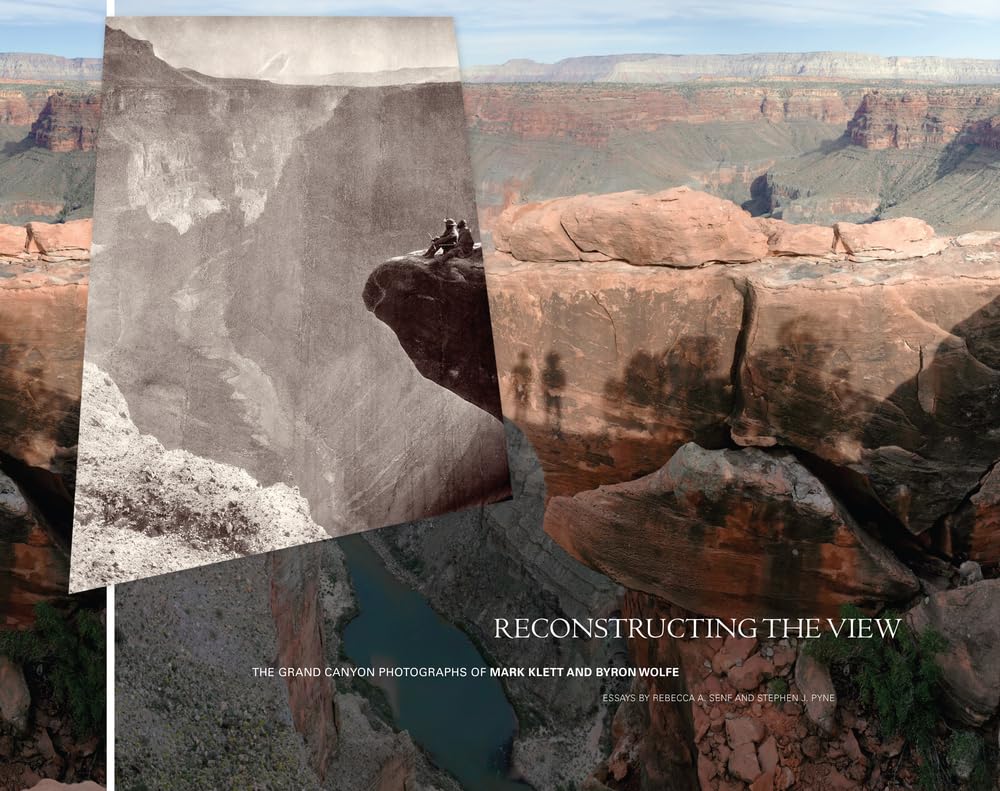
Reconstructing the View: The Grand Canyon Photographs of Mark Klett and Byron Wolfe (2012)
Rephotography is the practice of returning to the vantage point of an earlier image and making a new photograph from that same position, so that the new picture matches the old one. Mark Klett and his collaborator Byron Wolfe have refined this approach since the late 1970s, when the Rephotographic Survey Project retraced nineteenth-century survey photographs of the American West and re-made them as closely as possible. Robert Webb’s Grand Canyon: A Century of Change (1996), which rephotographs hundreds of views first made during the 1889–90 Stanton expedition in order to document physical and ecological change, represents a more documentary branch of Grand Canyon rephotography, whereas Reconstructing the View pushes the method toward a more conceptual inquiry. Instead of using rephotography simply to produce a strict “before and after” comparison, Klett and Wolfe take advantage of the possibilities of digital photography and processing to create striking large-scale panoramic digital composites that inventively connect times and places. For this project, the source images have been extended from historical photographs and drawings by William Bell and William Henry Holmes, to photographs by Edward Weston and Ansel Adams, and to souvenir postcards and images from Flickr. Altogether, the method, explained in Rebecca Senf’s essay, is broadened into an inquiry about the representation of the canyon itself, the history of which is the subject of Stephen Pyne’s essay. Instead of treating the canyon as a timeless icon, Klett and Wolfe show it as a place filtered through generations of image-making, so the work becomes a meditation on time, perception, authorship, and the accumulated mythology of the canyon. Beautifully produced with fold-outs, Reconstructing the View shows that Grand Canyon photographs do not merely depict the canyon but actively shape how it is seen, remembered, and culturally constructed.
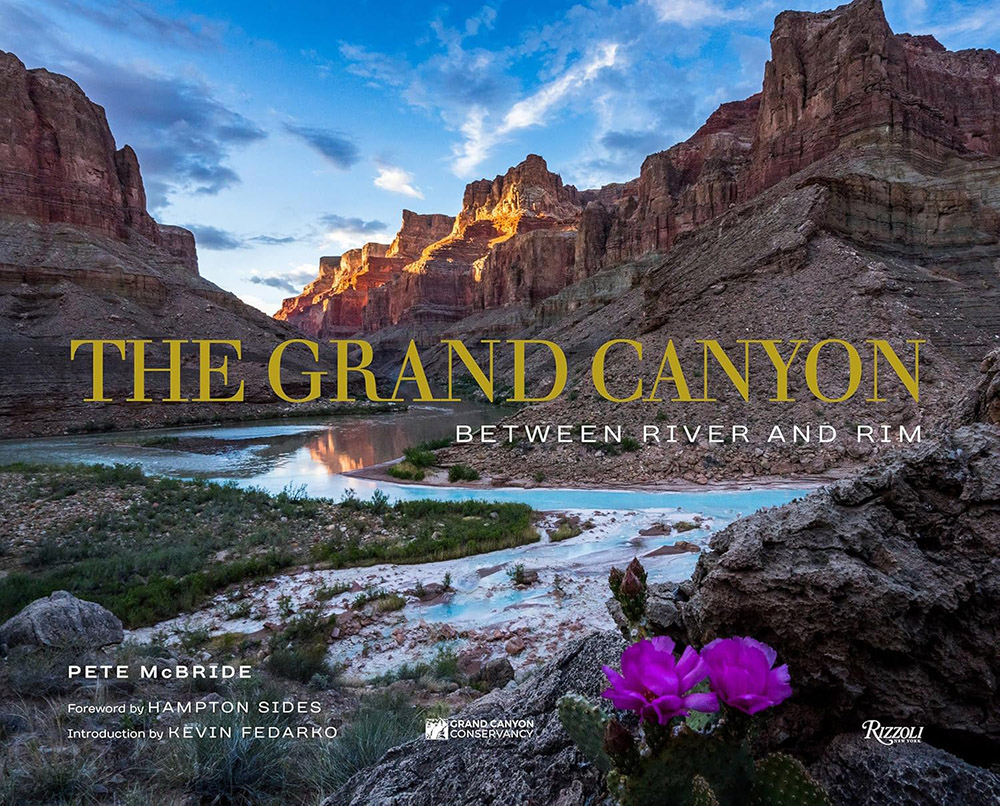
The Grand Canyon: Between River and Rim (2018)
In a one of the most photographed placed in America, how do you find new images within a straight photographic practice? One solution is to go to places where no other photographers have ever stood. While the rims overlooks are popular with tourists, and the river has been made accessible by the river-running industry, the area in-between is mostly inacessible beyond the limited number of trails. It is that area that the authors explore, by hiking the length of Grand Canyon National Park below the rim, 750 miles of rugged, unforgiving, barely mapped, and often vertiginous terrain. Between River and Rim brings together Pete McBride’s photographs and text, with an introduction by the writer Kevin Fedarko (author of The Emerald Mile) who was his companion on the traverse, to present the canyon from an unusual perspective. That gives it a distinctive place in Grand Canyon literature and photography. Pete McBride, the 2025 recipient of the Ansel Adams Award for Photography, has spent 20 years working along the Colorado River. Addressing directly recreation use (and overuse) of the canyon on the eve of the Grand Canyon National Park 100th anniversary, the book is not just a gripping adventure story, but also an argument for protecting the canyon’s threatened silence, fragility, and lesser-known terrain, a conservation concern later extended to the entire river in The Colorado River: Chasing Water (2024).




Nice blog! Thanks for including a link to the Kolb Brothers pages, I’ve wanted to see the photographs. I understand that NAU has an archive of their work. I really need to look into Reconstructing the View, and I don’t know how I’ve missed this one. Pete McBride’s book makes me want to photograph the west end of the Grand Canyon, where I have visited a few places without a camera. By the way, Pete’s book and your books are always on display and within reach.
Again, thanks for posting this list, as I really need to do some research before photographing the park in 6×17 with film; black and white or color or both? I embrace the dilemma.